Counterspace is a term I choose deliberately. In most paintings, what gets called negative space surrounds the subject, offering compositional balance, a kind of breathing room. My work inverts this relationship. The framing elements—whether naturescapes, architectural forms, or figures—arrange themselves asymmetrically around a held opening at the center. The periphery supports the center rather than the other way around.
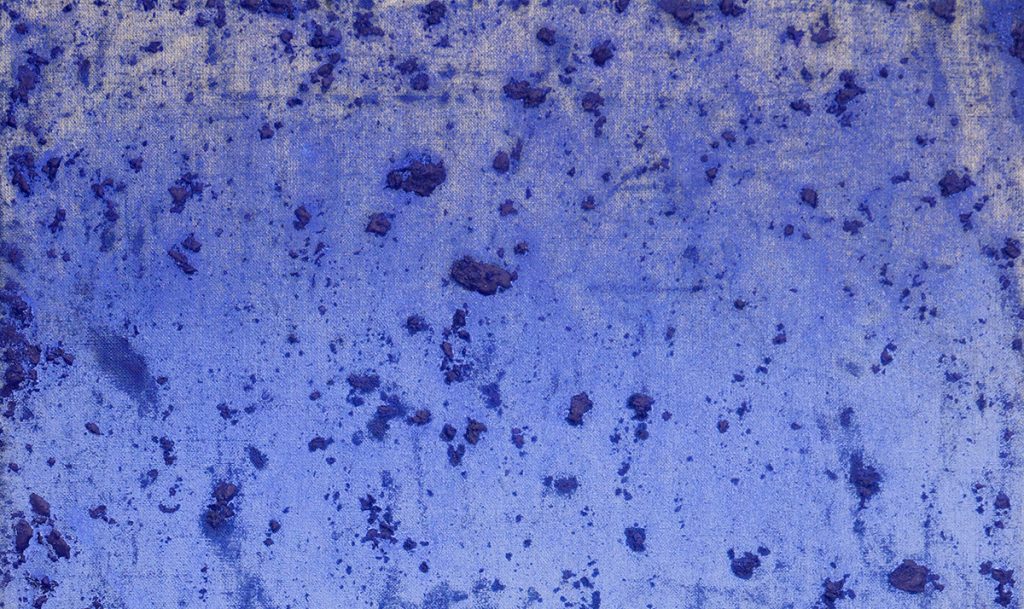
Detail from "Cobalt Blue Light"
I call this Counterspace because it carries its own fullness. The central fields take shape through extremely thin glazes, translucent layers of oil tinting the canvas over extended periods. Each pass deposits pigment that interacts with the weave of the linen beneath, creating dimensionality without creating focal points. The surface becomes responsive to ambient light. Throughout a single day, the same painting shifts as light enters from varying angles, activating depths within the layered structure. Texture, color, spatial complexity accumulate, and because nothing fixes the gaze, the whole field comes alive at once.
“The periphery supports the center rather than the other way around.”
The process is slow by necessity. Some painters describe their work in terms of decisive gestures, absolute moments of arrival. The effect I am after requires sustained and subtle accumulation. Layer after layer of translucent color, each adjusting the resonance of what came before. Counterspace deepens over weeks and months until the field earns its structure through liminality alone.
Detail from "Dousing the Dark for Light"
Something happens in my body when a painting reaches this threshold. When no hard edges remain and no spots call for attention, a kind of scintillating wash moves through me. Color and motion absorb me fully. The field holds me as I make it, the way an overtone in music holds the frequencies that produce it. This sensation is how I know when counterspace is established. The field becomes buoyant, supportive, ready to hold whoever stands before it.
“The field holds me as I make it, the way an overtone in music holds the frequencies that produce it.”
What I want for the viewer is an encounter that lifts them into a different register of attention. A fresh opening rather than a conclusion.
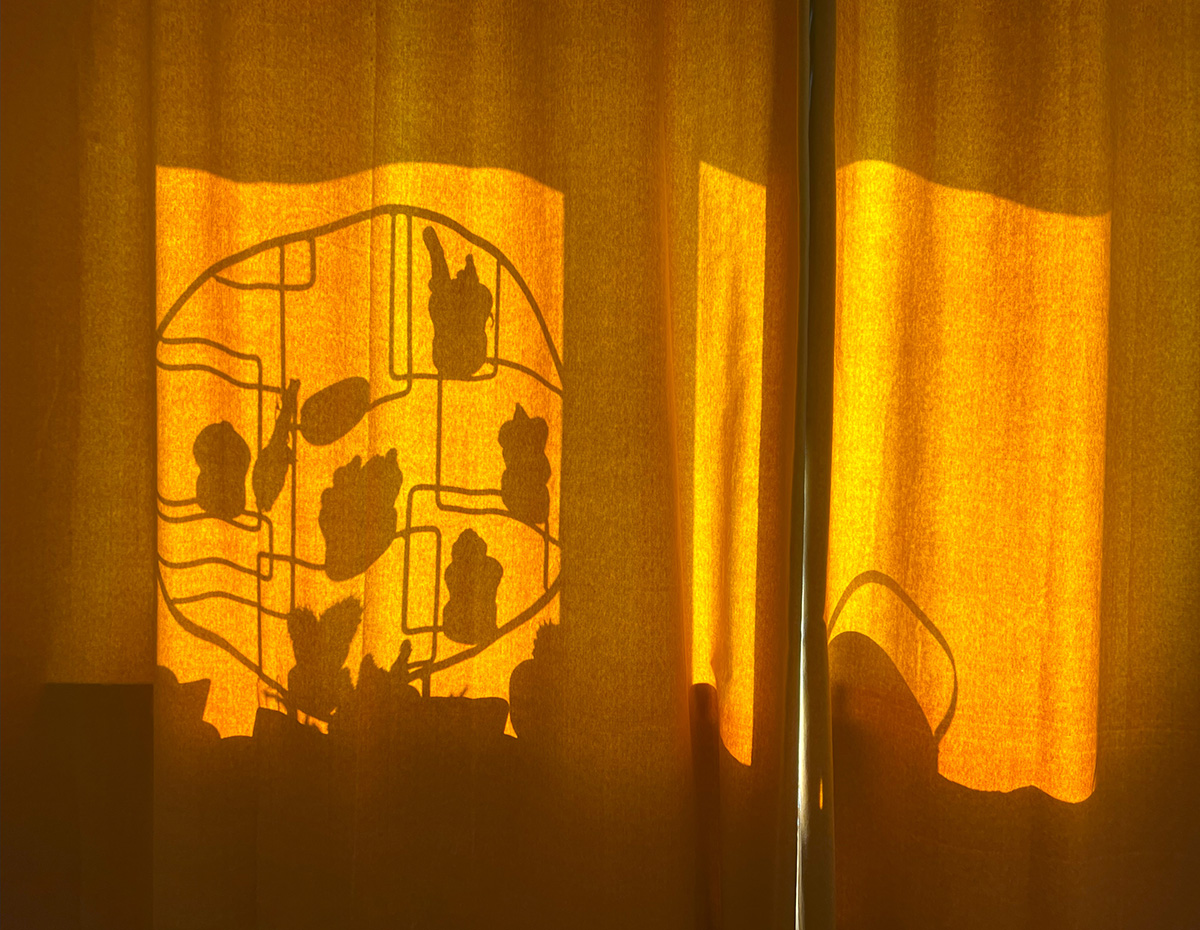
Sunlight saying hi to my curtains
“A fresh opening rather than a conclusion.”
Counterspace is not a term I invented. It emerges from projective geometry and extends into computational research on higher-dimensional space, into philosophical and theological traditions of formative emptiness, into the work of other artists exploring this territory through different means. My practice brings these threads into painted form. Future essays will follow them outward.




Leave a comment